


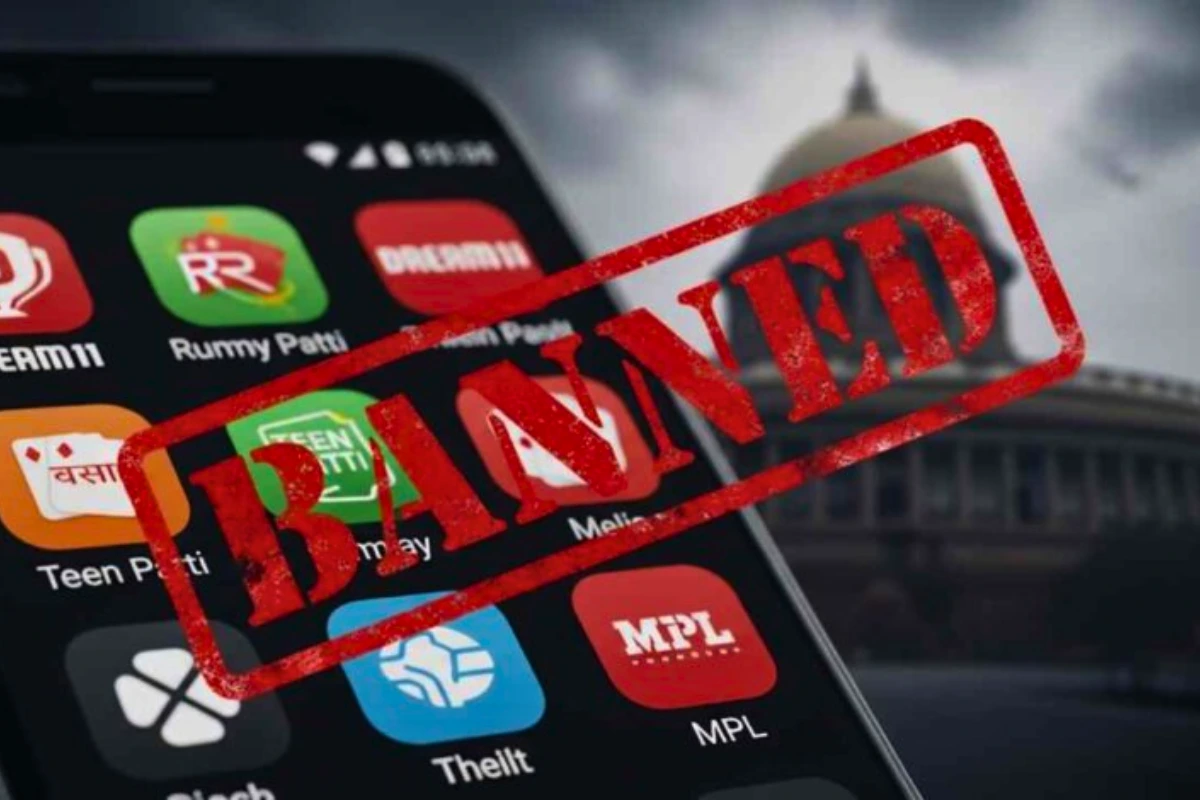






NEW DELHI: India has taken a dramatic step with the Promotion and Regulation of Online Gaming Bill, 2025, banning all real-money online games—including fantasy sports, rummy, poker, and prediction markets. While the government frames it as a move to “protect youth and families,” the consequences are massive and multi-dimensional, threatening livelihoods, foreign investment, tax revenue, and the startup ecosystem.

This is not just a policy decision—it is a tectonic shift in India’s digital economy.
Impact on Employees and Households
The immediate human cost is staggering. Major real-money gaming companies—Dream11, MPL, Games24x7, Zupee, A23/Adda52, Junglee Games, Gameskraft, WinZO, and Baazi Group—are facing operational shutdowns.
Estimates of direct employment impact:
- Employees affected: ~4,200–8,900
- Households impacted: ~4,200–8,900 (assuming 1 household per employee)
- People in those households: ~18,700–39,000 (using India’s average household size of 4.4)
Breakdown by company (tentative):
| Company | Main Platforms | Employees (Range) |
|---|---|---|
| Dream11 (Dream Sports) | Fantasy cricket | 1,000–1,900 |
| Games24x7 | RummyCircle, My11Circle | 821–1,030 |
| MPL | Fantasy, Rummy | 435–1,098 |
| Zupee | Ludo, card, trivia | 420–713 |
| A23 (Head Digital Works) | Rummy, Poker | 201–500 |
| Junglee Games | Junglee Rummy | 501–1,000 |
| Gameskraft | RummyCulture, Pocket52 | 448–700+ |
| WinZO | Arcade + real money | 251–500 |
| Baazi Group (PokerBaazi, RummyBaazi) | Poker, fantasy | 179–458 |
| Probo | Prediction markets | Unknown |
Business and Revenue Losses
The ban does not only affect employees. The economic cost is enormous:
- Revenue collapse:
- India’s real-money gaming sector was valued at ₹23,000–25,000 crore (~$2.8B) in FY2023–24.
- Projected growth to ₹50,000+ crore by 2027 is now effectively blocked.
- Foreign Direct Investment (FDI) at risk:
- Over $3B FDI flowed into gaming startups from global investors like Tiger Global, Sequoia, Accel, and SoftBank since 2018.
- With the ban, these investments may be written off, and future FDI could dry up, chilling investor sentiment across India’s digital startup ecosystem.
- Tax revenue loss:
- Gaming platforms contributed ₹4,000–6,000 crore annually in GST and corporate taxes.
- These critical government revenue streams will vanish overnight.
- Advertising and sports sponsorship impact:
- Gaming platforms spent ₹3,500+ crore per year on advertising, sponsoring IPL and cricket events.
- Loss of sponsorships threatens sports financing, media revenue, and event operations.
The Innovation and Startup Chill
India has ambitions to become a global e-sports and skill gaming hub, with government incentives for tournaments, training centers, and startup R&D.
Yet, the blanket ban sends a clear signal of regulatory unpredictability:
- Startups fear arbitrary shutdowns, even for sectors contributing billions in revenue.
- Potential innovation in e-sports, gaming tech, AI in gaming, and digital skill-based products may move overseas.
- Job creation in India’s tech ecosystem is at risk, potentially reversing gains made in digital entrepreneurship over the last decade.
Government Justifications vs Reality
The government cites three main reasons:
- Youth protection – prevent gambling addiction and suicides.
- Financial security – avoid money laundering, tax evasion, and black-money circulation.
- Uniform regulation – harmonize laws across states.
While these are legitimate concerns, the government chose total prohibition rather than:
- Regulated platforms with caps on stakes,
- Responsible gaming frameworks,
- Distinction between skill-based vs chance-based games, or
- State-level regulation similar to the U.S. or Singapore.
The result: millions of law-abiding users, thousands of employees, and billions in investor money are penalized indiscriminately.
Wider Impact on India
Immediate consequences:
- Jobs: 18,000–39,000 people affected directly; indirect jobs in hundreds of thousands could vanish.
- Business: ₹20,000+ crore industry value wiped out.
- FDI: $3B+ investments at risk; future foreign funding frozen.
- Taxes: ₹4,000–6,000 crore/year lost in GST and corporate tax.
- Innovation: Potential exodus of talent to foreign markets, delaying India’s tech ambitions.
- Sports & entertainment: IPL and other sponsorship revenues threatened.
In short, this bill doesn’t just protect citizens—it risks destroying a fast-growing, legally compliant digital sector.
The Online Gaming Bill 2025 is being framed as a moral and social safeguard, but the evidence suggests it is an economic and technological disaster waiting to happen.
India risks:
- Wiping out lakhs of jobs,
- Losing thousands of crores in tax revenue,
- Scaring off global investors, and
- Harming the future of e-sports and skill-based digital innovation.
This is not a “youth protection” measure—it is a warning shot to India’s tech and startup ecosystem. Policymakers must now ask: Are we protecting citizens, or killing a sector that could make India a global tech leader?
Tentative Facts / Pointers:
- Employees affected: ~4,200–8,900
- People in households affected: ~18,700–39,000
- Sector valuation FY23–24: ₹23,000–25,000 crore
- Projected growth: ₹50,000+ crore by 2027
- FDI since 2018: ~$3B
- GST & taxes: ₹4,000–6,000 crore/year
- Ad spend: ₹3,500+ crore/year