


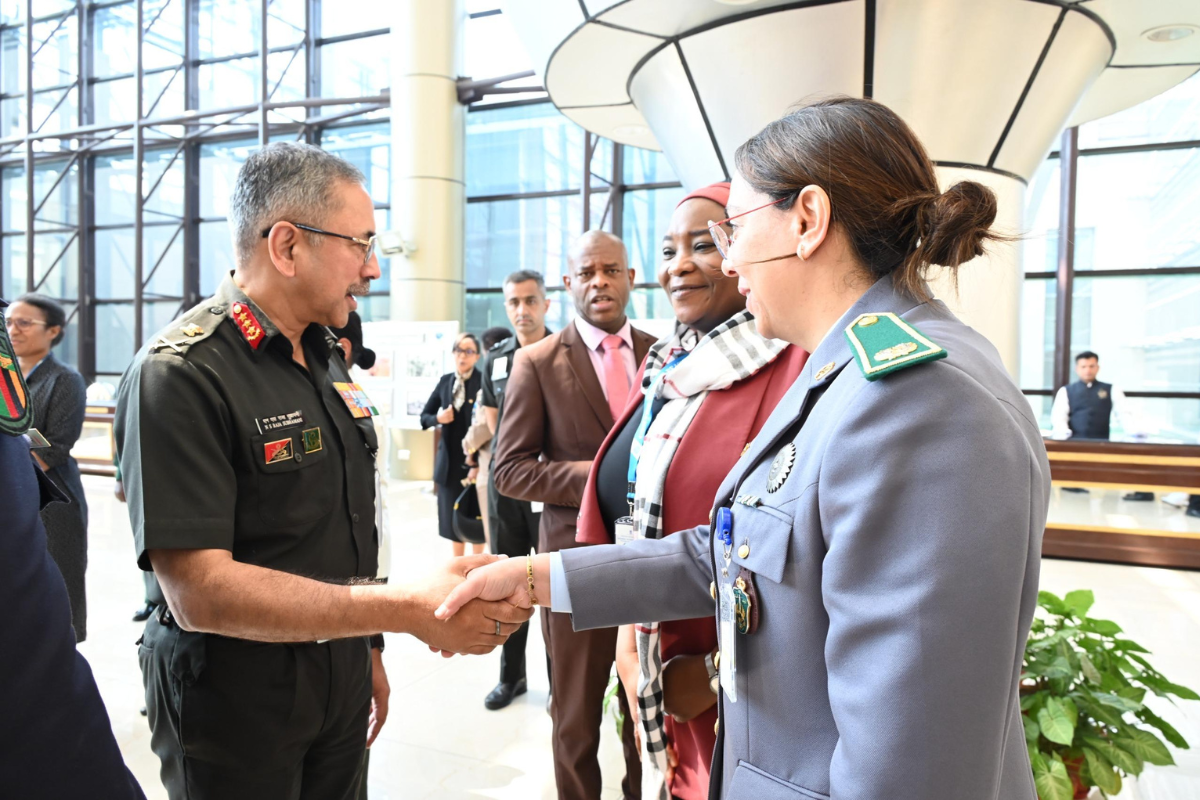






NEW DELHI: The Indian Army, through the Centre for United Nations Peacekeeping (CUNPK), is hosting a two-day conference titled ‘Conference on Women Peacekeepers from the Global South’ at the Manekshaw Centre in New Delhi on February 24-25.

Organized in collaboration with the Ministry of External Affairs and the Ministry of Defence, the event has convened women peacekeepers from 35 nations to discuss the evolving role of women in peacekeeping operations and strategies to enhance their participation.

The conference aims to strengthen the role of women in UN peacekeeping by fostering dialogue, sharing experiences, and improving collaboration among Global South nations.
On the inaugural day, participants had the honor of meeting Draupadi Murmu, President of India, at Rashtrapati Bhawan, followed by a keynote address from S. Jaishankar, External Affairs Minister.
In his opening remarks, Lt. Gen. N.S. Raja Subramani, Vice Chief of Army Staff (VCOAS), commended the exceptional service of women peacekeepers, stating, “The Women Peacekeepers have broken the stereotypes, shattered barriers, and rose above challenges to become leaders and protectors of their nation and also in the communities, where they have been engaged in for peacekeeping.” He emphasized India’s commitment to the Global South, highlighting the nation’s wealth of experience and resources contributing to collective development efforts.
Lt. Gen. Rakesh Kapoor, Deputy Chief of Army Staff (IS&C), addressed the challenges faced by International Humanitarian Law, noting that the presence of women peacekeepers serves as a role model for women’s empowerment and encourages local women in host nations to contribute to societal upliftment.
The inaugural day featured two sessions:
Session 1: Addressing Sexual Exploitation and Abuse
Moderated by Mr. Christian Saunders, UN Special Coordinator, this session included contributions from Maj. Radhika Sen, UN Military Gender Advocate of the Year 2023, Maj. Hind Jirari (Morocco), and Col. Simone P.C. Antunes (Brazil). Discussions focused on mechanisms for preventing, reporting, and addressing sexual exploitation and abuse in peacekeeping environments, emphasizing best practices and leadership’s role in promoting zero tolerance for misconduct.
Session 2: Technology in Peacekeeping: Can We Do Better?
Moderated by Ms. Debjani Ghosh, Distinguished Fellow at Niti Aayog and Former President of NASSCOM, the session featured Lt. Gen. Sadhna Nair, DGMS (Army), and Brig. Munesh Tamang, Former Sector Commander, UNMISS. The discussion centered on integrating advanced technologies such as surveillance drones, AI-powered data analysis, and real-time communication systems to enhance operational effectiveness in peacekeeping missions.
The conference underscores India’s leadership in promoting inclusive and effective peacekeeping operations, reaffirming the nation’s commitment to gender equality and the vital role women play in global security and peace efforts. Through collaborative discussions and actionable strategies, the event aims to enhance the understanding and impact of women peacekeepers in future missions.