








NEW YORK: At the NYC Green School Conference, Aubrey Streit Krug, Director of the Perennial Cultures Lab at The Land Institute, Kansas, joined global experts in the session “Greening Campuses – Sustainable Infrastructure for Inclusive Education” to explore how universities can rethink their physical and operational footprint to meet sustainability goals.

The session brought together environmental architects, university leaders, and sustainability officers from institutions such as Unity Environmental University, The Land Institute, and COPE NYC.
Panelists showcased projects ranging from net-zero buildings and renewable energy systems to inclusive design models that prioritize well-being.
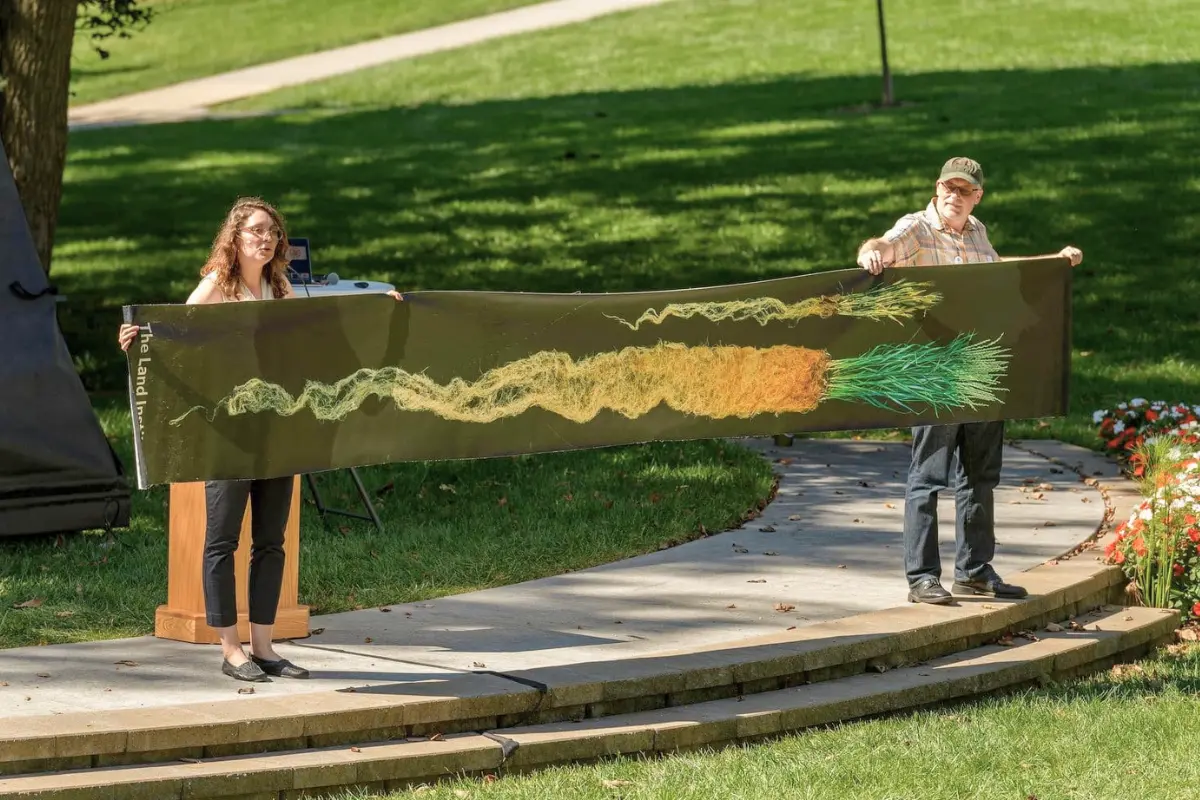
Streit Krug drew attention to the role of perennial plants in building climate-resilient systems, linking ecological insights directly to the design of sustainable learning environments.
“Perennial plants that live for multiple years have living roots below ground that hold soil and help use nutrients and water efficiently. Those are important factors for how we can build systems that address climate,” she explained.
“They allow earth systems to continue cycling elements and nutrients. In contrast, when we switch to annual farming systems, we disturb the soil each year through replanting and tillage, often relying on chemicals and fossil fuel-based fertilizers that contribute to carbon release.”
Speakers stressed that physical spaces play a vital role in shaping climate-literate citizens, and that operational changes—like renewable energy integration, soil conservation, and regenerative campus landscapes—can reinforce sustainability-focused curricula.
The session positioned campuses as living laboratories for climate solutions, encouraging attendees to adopt global best practices in resilient design, regenerative infrastructure, and inclusive educational spaces.

By linking ecological research with architectural and institutional innovation, Streit Krug and her co-panelists underscored that the future of education must be rooted in both environmental stewardship and student well-being.