


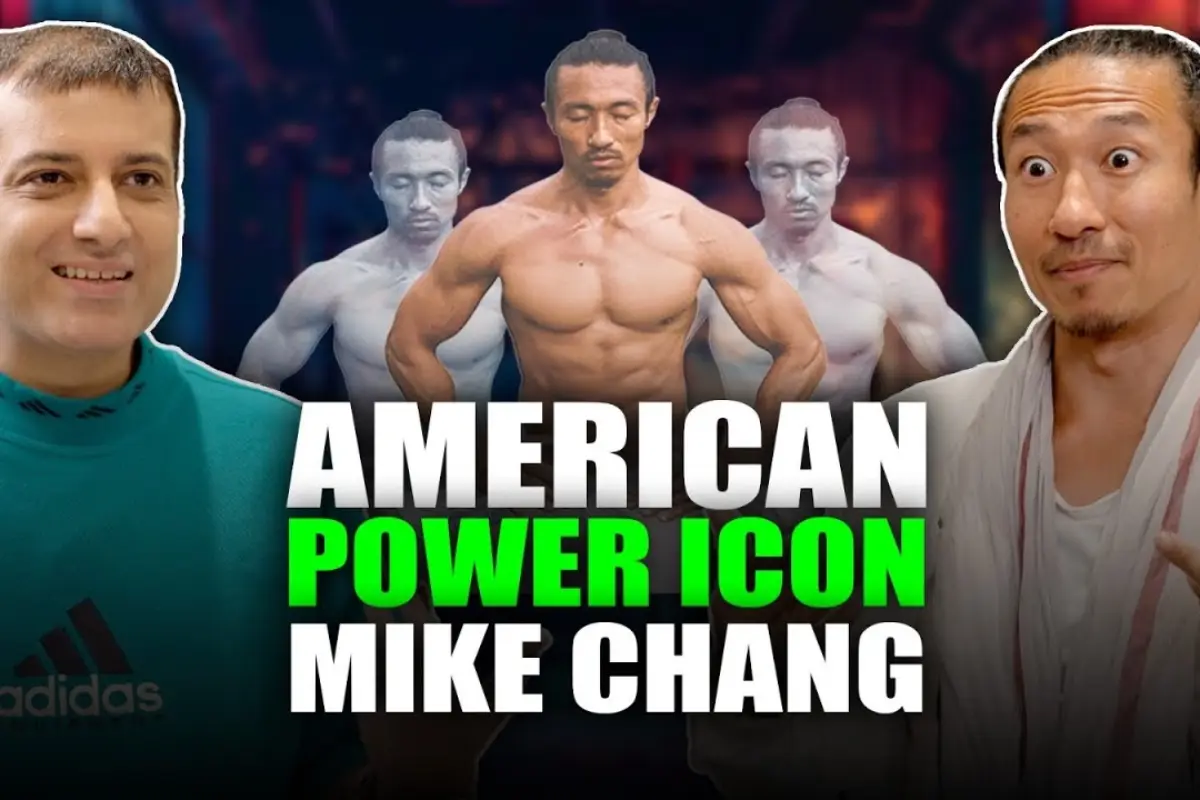






Rohan Dua welcomed Mike Chang—one of the most followed fitness icons in the United States, entrepreneur, and founder of Flow 60. From building a multi-million-dollar fitness empire to walking away from money in search of peace, Chang’s journey is as unconventional as it is transformative.

In this candid conversation, Mike opens up about stress, happiness, loss, healing, family, fitness, mental freedom, and why true health goes far beyond muscles.
Q: Mike, you grew up in Houston and Austin—cities known for science and innovation. Why did you choose this path, and why did you name your company Flow 60?
Mike Chang:
I lived in the US for many years and realized I was living inside a bubble. There are so many cultures and ways of thinking across the world, and I wanted to experience that. That’s why I’m in Bali today—it just landed on my map.
As for Flow 60, it comes from 60 specific movements that allow a person to enter a state of flow. Flow is a meditative state—true presence. Presence is happiness. Presence is inner peace. And that’s what today’s world desperately needs.
Q: When you started Flow 60, you were already earning around $13 million a year. Why leave that level of financial success?
Mike Chang:
I didn’t care about money anymore.
Like most people, I chased money and success. But when I experienced a level of happiness beyond anything I knew existed, money stopped mattering. I wanted to stay in that state—freedom in my mind.
Most people live stressed, fearful, constantly worrying. They don’t know what mental quietness feels like. I didn’t either—until about 10 years ago, when I experienced it by accident. From that moment, I knew I didn’t want more money. I wanted true happiness.
Leaving that career was the best decision I ever made.
Q: You say it happened “by accident.” What exactly does that mean?
Mike Chang:
I didn’t intentionally create that happiness. I accidentally opened up energy in my body, cleared my mind, and released fear. The bliss was beyond anything I knew existed.
It took me years to understand what I did and how it worked. Flow 60 is a way for others to access that same state—to reduce mental chatter, anxiety, and nervousness.
This isn’t just for fit people. It’s for everyday people who don’t want intense gym routines but want peace of mind and basic health.
Q: You lost your father and sister. How did that shape you emotionally?
Mike Chang:
My dad had schizophrenia for most of my childhood. It was scary, and I worried I might inherit it.
Later, my dad passed away from a stroke, and my sister died of cancer. Today, my mother—75 years old—has just started living with me. She’s had knee surgery, strokes, and health complications. I’m training her every day now.
People underestimate the body’s ability to heal. The body adapts—no matter your age. If you commit daily, you can improve.
She’s the only family member I have left from my side. My goal is to help her regain strength.
Q: Did these losses break you—or make you stronger?
Mike Chang:
They didn’t break me. They were difficult, but by then I had already learned how to process emotions—how to let go of attachment and fear.
When my sister passed away, my son had just been born. I was caring for my wife, my newborn, managing her funeral, and starting Flow 60—all at the same time.
Most people don’t know how to process grief. That’s why tragedy stops their lives for months or years. But emotions don’t need to be carried forever. They can be released—from the body and the mind.
Everyone will face loss. The question is: do you know how to let it go?
Q: What did your parents do professionally while you were growing up?
Mike Chang:
My father worked in real estate and with oil companies, mostly in HR. My mother didn’t work for a while, then moved into retail. She loved talking to people.
Q: Is that where your first startup journey began?
Mike Chang:
Yes. My first company was Six Pack Shortcuts. People overcomplicate fitness. I believe in the 80/20 rule—do what works and cut out the rest.
Everyone wants a six-pack. We gave them the shortcut.
Q: You later left Six Pack Shortcuts, which was earning nearly $30 million annually. Why?
Mike Chang:
I told my partners I wanted to shift direction—to still do fitness, but focus on mental clarity and happiness.
They didn’t share that vision. I wasn’t willing to let it go. So we separated.
Q: Your exercises are unconventional—like blowing out candles for breathing. Why?
Mike Chang:
I make exercise fun. People don’t like hard work—but they’ll do something enjoyable.
The candle exercise increases lung capacity. It’s deep breathing, disguised as a game.
People need daily movement. It can be miserable—or fun. I choose fun.
Q: You also emphasize relaxing arms and releasing tension. Why is that important?
Mike Chang:
Every emotion creates tension in the body. Stress becomes normal, so people don’t even realize they’re tense.
When you release physical tension, emotions release too. When the body relaxes, the mind expands.
Start with relaxing your hands and feet—it triggers relaxation throughout the nervous system.
Q: You often tell people to stop worrying about what others think. Why?
Mike Chang:
The biggest enemy in anyone’s life is themselves.
Self-labeling—“I’m smart,” “I’m fit,” “I’m important”—creates internal conflict. You start acting for approval instead of authenticity.
When you stop thinking about yourself so much, you get out of your own way. That’s real freedom.
Q: What exactly is the Flow 60 training system?
Mike Chang:
Flow 60 is not just a program—it’s a way of living.
The 60-day body–mind transformation is a standalone program using this system. Participants train online with me weekly and attend over 70 live classes per week with instructors.
Q: How much does the program cost?
Mike Chang:
Currently $477. It used to be over $2,000. We reduced the price to help more people—even if it means operating at a loss.
Q: You openly talk about farting in public and breaking social norms. Why?
Mike Chang:
Social norms control people more than logic.
Holding in bodily functions is unhealthy—but people worry about acceptance. I believe in being the change. I fart. I walk barefoot. I blow my nose. I don’t care what people think.
Even on my first date with my wife, I told her upfront—and now we’re married.
Q: Your exercises include tapping, twisting, and shaking. Where do they come from?
Mike Chang:
These practices are thousands of years old—used in martial arts and energy work.
Gyms focus on muscles. I focus on circulation and energy.
Q: Do genetics decide our health destiny?
Mike Chang:
Genetics are the material—but habits shape the outcome.
Epigenetics shows we can influence how genes express themselves. You start with a canvas, but your lifestyle paints the picture.
Q: What is your educational background?
Mike Chang:
I studied business and marketing—but honestly, I didn’t learn much from school. I worked from age 14, doing door-to-door newspaper sales for the Houston Chronicle.
Q: You quit alcohol and smoking. How did that change your life?
Mike Chang:
Completely.
I used to drink to be social. Now I’m expressive all the time—free, without needing substances.

People enjoy my company more now because I’m comfortable being myself.