


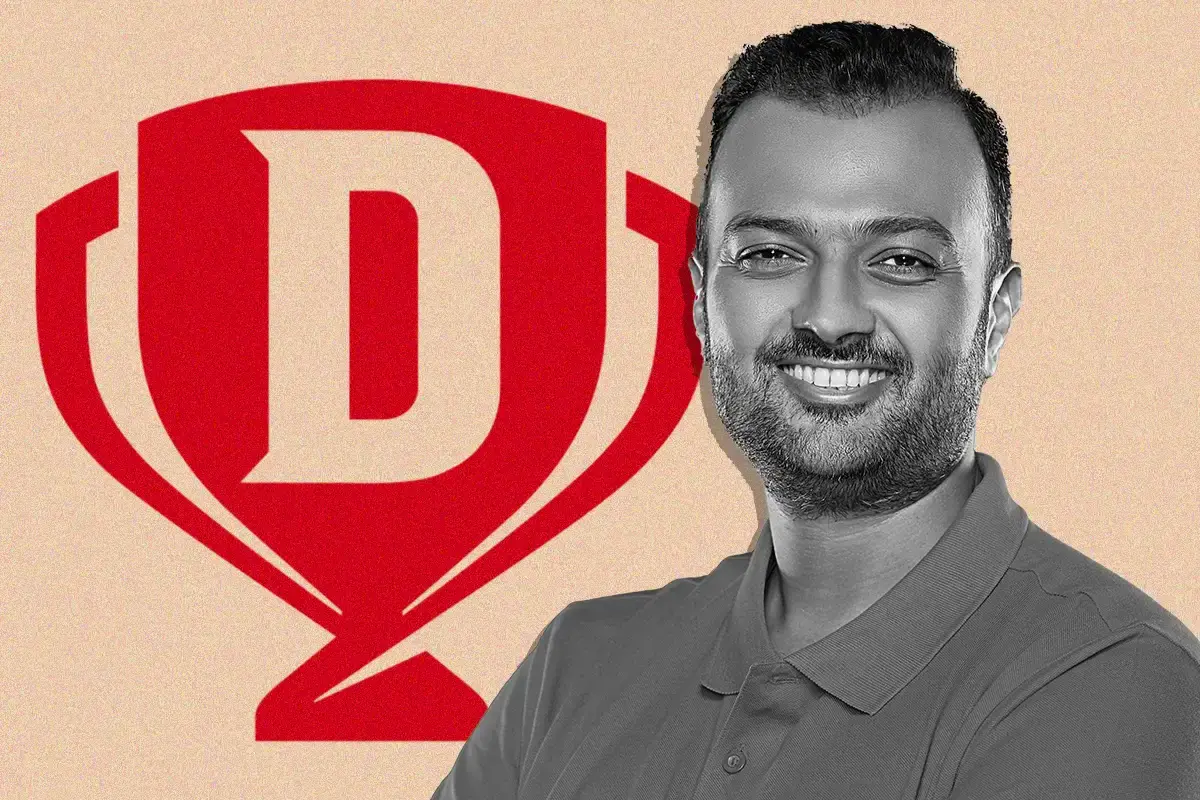






NEW DELHI: Dream Sports, the parent company of fantasy sports major Dream11, has confirmed that it will not challenge the constitutional validity of India’s new gaming law, co-founder Harsh Jain told Moneycontrol in an interview on August 25.

Focus on Future, Not Legal Battles
“I think the government has made it clear that they don’t want this right now. I don’t want to live in the past. We want to focus entirely on the future and not fight with the government on something that they don’t want,” Jain said.
This comes despite 95 percent of the group’s revenues and 100 percent of its profits originating from cash-based contests. Dream Sports reported an operational revenue of Rs 6,384.49 crore for FY23, up from Rs 3,841 crore in FY22.
Shift to Free-to-Play Model
India’s new gaming law prohibits online money games, which are games where a user deposits money, directly or indirectly, with the expectation of earning winnings. Following the law’s passage in Parliament, Dream11 halted all paid contests on August 22 and shifted entirely to free-to-play online social games. The law subsequently received the President’s assent and became an Act.
Jain emphasized, “We operated our current business model for the last 14 years and scaled it to over 260 million users, as it was constitutionally protected and approved by the Supreme Court of India. If the government has decided that they don’t want it and they’ve passed a bill through parliament and made it an Act, and this is a new law, we want to abide by that.”
He added, “Now, if for whatever reason, the law changes (again) or regulations come in, which allow us to continue with that business model, then the law is telling us you’re allowed to do it again. Today, the (current) law stands.”
Industry-Wide Regulation Efforts
Jain also reflected on the fantasy sports industry, stating that companies could have worked harder on self-regulation.
In March 2025, the Federation of Indian Fantasy Sports (FIFS), of which Dream11 is a founding member, along with the All India Gaming Federation (AIGF) and E-Gaming Federation (EGF), announced a ‘Code of Ethics’ to implement consistent user safety standards.
The framework, based on global best practices, includes age-gating, stringent KYC compliance, user-set spending limits, self-exclusion, annual third-party audits, and comprehensive reporting mechanisms. Jain admitted, “We were all waiting for a regulator to come. But maybe we should have been harder on ourselves to regulate this as an industry and not just wait for the government to appoint a regulator. Maybe it has come a little bit too late.”
Strategic Pivot and Business Diversification
Founded in 2008 by Harsh Jain and Bhavit Sheth, Dream Sports was last valued at $8 billion, following an $840 million funding round led by Falcon Edge, DST Global, D1 Capital, Redbird Capital, Tiger Global, TPG, and Footpath Ventures in November 2021.
Apart from Dream11, Dream Sports houses brands such as FanCode (sports content and commerce platform), DreamSetGo (sports experiences platform), Dream Game Studios (mobile game development), and the philanthropic arm Dream Sports Foundation.
The company is also exploring new ventures beyond gaming, including a personal finance app, Dream Money, which allows users to invest in gold and fixed deposits, as well as track spending.
Compliance with New Law
Jain reiterated Dream Sports’ commitment to abiding by the new Act: “We do believe regulation was the correct way forward, but we understand that this is not something that the government wants and we’ve always been a law-abiding company.”
This approach contrasts with other real-money gaming companies reportedly considering legal challenges to the new law in the coming weeks.