


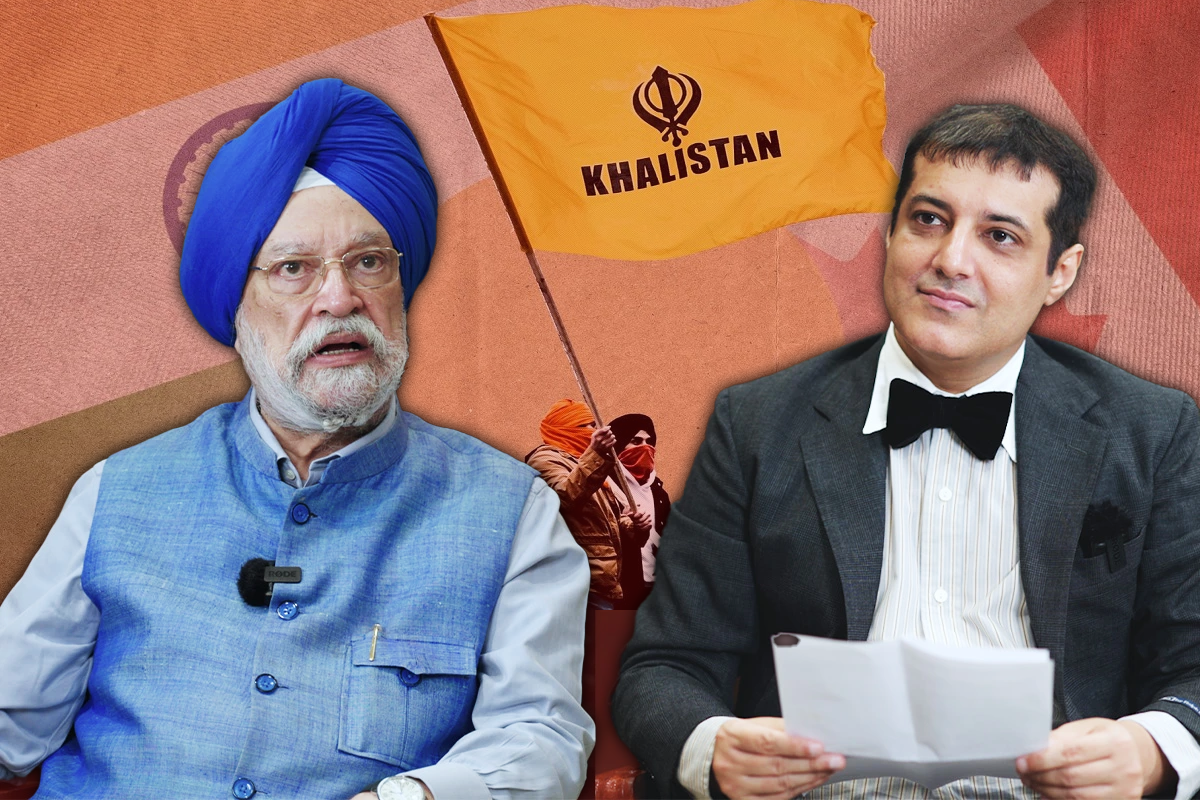






NEW DELHI: In an exclusive conversation with The New Indian, Union Minister for Petroleum and Natural Gas Hardeep Singh Puri spoke to Executive Editor Rohan Dua about the evolving state of India-Canada ties, growing Sikh representation in Canada’s Parliament, and his personal diplomatic interventions during a tense chapter in bilateral relations.

Puri acknowledged the rising influence of the Indian diaspora in Canada’s political framework, noting the election of nearly 25 Punjabi and Sikh-origin MPs in the new government.
WATCH: India Hits Jackpot| Guyana Like Oil Discovery In Andaman: Hardeep Puri| 500 Wells| Highest In 37 Yrs
“It is now that we see almost 25 MPs of Punjabi and Sikh origin in Canada under the new government,” said Puri. “But there was a time when relations were strained — especially when the then Punjab Chief Minister Captain Amarinder Singh refused to meet Canadian Defence Minister Harjit Sajjan over allegations of being a Khalistani sympathiser.”
Recalling the episode from 2018, Puri revealed that he was handpicked by Prime Minister Narendra Modi to receive Canadian Prime Minister Justin Trudeau in Amritsar, amid controversy and political resistance from Punjab’s leadership.
“I was sent by the Honourable Prime Minister to receive Prime Minister Trudeau when he came to Amritsar. The Punjab government had sent Navjot Sidhu, but Captain Sahib didn’t want to meet him. I sat down with Captain and reminded him that this wasn’t about personal issues — it was about state protocol. I used my margin of persuasion, and he finally met Trudeau,” Puri recounted.
He added that public anger in Punjab remains strong, largely due to the perception that Canada has given space to separatist voices.
ALSO READ: Hardeep Puri: Modi Gets Upset If Bureaucrats Are Mistreated
“People in Punjab are very angry because of the encouragement some of these elements receive from abroad,” he noted.
From Friction to Friendship: A Shift in Tone?
Despite past tensions, Puri sounded hopeful about the future trajectory of India-Canada relations. He shared a humorous yet telling anecdote from a recent diplomatic lunch with Canadian officials — including several Sikh ministers.
“One of the ministers, I think his name was Benz, told me how he moved to Canada at a young age, studied, and became a minister. I couldn’t resist and told him — ‘I stayed back in India and became a minister here.’ We all had a good laugh.”
Puri emphasized that international relations are never static, and each new government presents a fresh opportunity.
“Any situation with any country — whether in the neighbourhood or elsewhere — never remains static. I’m sure the newly elected government in Canada will have to navigate internal landmines, but I believe things will improve,” he said.
His remarks come at a critical juncture, as New Delhi continues to express concern over anti-India elements gaining visibility in parts of Canada. Yet, with a fresh mandate and deeper representation of the Indian diaspora in Canadian politics, there may be renewed space for dialogue and cooperation.