


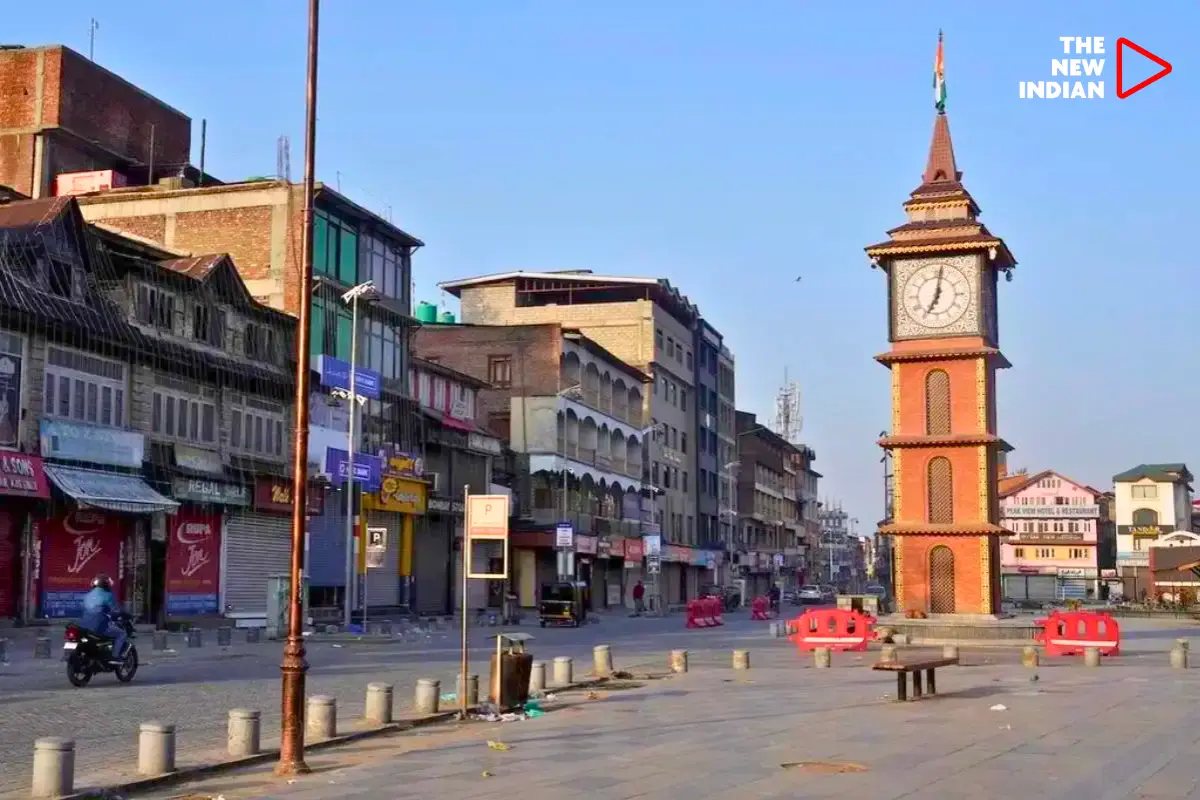






There is one unchanging reality that defines Jammu and Kashmir: Pakistan will not stop. It hasn’t stopped for decades. It has not paused its proxy war, nor shown remorse or retreat in its effort to disrupt and destabilise life in the valley. Yet, in the shadow of this persistence, a quiet and powerful transformation has been taking shape, one that Pakistan perhaps fears more than any military operation. Since the abrogation of Article 370, Kashmir’s social and economic rhythm has begun to shift. Pulwama and Downtown Srinagar, once dominated by shutdowns, violence, and radical slogans, are now witnessing normalcy. Markets open, tourists arrive, buses move, and classrooms fill. Young Kashmiris, once vulnerable to the pull of terrorism and separatism, are now turning their homes into homestays and their energies towards enterprise. Local terror recruitments have plummeted to zero. And for the first time in decades, Kashmiris have caught a glimpse of what peace feels like — not the silence of submission, but the hum of opportunity. The idea of Pakistan, once idolised in parts of the valley, has begun to fade from the imagination. The shift is subtle but significant: more and more Kashmiris are recognising that their future lies not in a theocratic mirage across the border but within the frame of a democratic, inclusive, and developing India.

Yet, this progress remains fragile, not just because of Pakistan’s designs, but because of a deeper, more corrosive dynamic at play. Unlike the rest of India, Kashmir’s response to terror is mediated through a political lens that often blurs the boundary between resistance and rationalisation. When Mumbai was attacked on 26/11, the city grieved and resumed within days. Agra, a constant target due to its symbolic value, has seen footfall never stop. Delhi, Bengaluru, Jaipur, cities that have been bloodied before, bounce back. But in Kashmir, a single terror strike can shut the valley down. Markets close. Tourism collapses. Suspicion spreads. Why?
The difference lies in the political response. In Jammu and Kashmir, terrorist acts are often contextualised within the framework of unresolved political grievances or political separatism. This framing, at times implicit, at times overt, allows room for justification. Terror becomes a by-product of politics rather than an outright crime. Condemnation is conditional. Outrage is selective. And the result is a dangerous moral ambiguity that sets Kashmir apart from the rest of the nation, where national interest and security are non-negotiable.
Consider the example of Asaduddin Owaisi, MP and President of the All India Majlis-e-Ittehadul Muslimeen. A fierce critic of the Centre, he speaks unapologetically for Muslim identity and rights. Yet, his criticism operates firmly within the constitutional framework of India. After leading a large rally against the Centre’s Waqf (Amendment) Act in Hyderabad, Owaisi didn’t shy away from calling out Pakistan following the Pahalgam terror attack that killed 26. He stood firmly with the armed forces, praised Operation Sindoor, and demanded that terror infrastructure across the border be completely destroyed. “Waqf law is an internal matter of my country,” he said, making it clear that external threats must override political differences. This clarity is refreshing and sadly missing in much of Jammu and Kashmir’s mainstream political discourse. The local leadership often fails to draw a clear line between democratic dissent and ideological collusion. As a result, the common Kashmiri remains trapped. Progress halts, investors disappear, and hope becomes hostage to a narrative that is both vague and damaging.
This ambiguity has real consequences. It breathes life into Pakistan’s propaganda and lends credibility to the narratives that justify terror. Take for instance the recent private member’s bill moved in J&K Assembly by a National Conference legislator seeking a complete ban on alcohol in Jammu and Kashmir, citing the region’s Muslim-majority character. Why invoke only one religion, when abstinence is prescribed across faiths? This is not just flawed reasoning. It is ideological surrender. It aligns disturbingly with the rhetoric of Pakistan’s Army General Asim Munir, who openly claimed that Hindus and Muslims cannot coexist, a direct attack on India’s secular ethos. Or take another recent example: a Member of Parliament from Jammu and Kashmir decried what he called a “cultural invasion” in Kashmir. On the surface, it may sound like an assertion of identity, but underneath lies a dangerous echo of the same separatist logic that Pakistan uses to rationalise its proxy war. When mainstream Indian leaders begin to parrot the language of India’s enemies, they not only erode national cohesion but also lend strategic cover to acts of terror.
The aftermath of the Pahalgam attack, however, carried a glimmer of resistance from the common Kashmiris. A significant number of Kashmiris publicly condemned the killings and pointed directly to Pakistan’s role. This is no small shift. It reflects a subtle but growing defiance, a willingness to speak despite the shadows. Yet we must not confuse this with finality. The ecosystem of Pakistan-backed ideology is still alive, sustained not just by guns but by voices that operate in our political circles, our courts, our universities, our media, and our system too. These are the collaborators who do not carry weapons but wield influence. They shame dissenters, amplify fear, and keep alive the idea that Pakistan is watching and punishing.
This fear is Pakistan’s greatest weapon. It doesn’t always come from across the border. It comes from within, through whispers, surveillance, social intimidation, and ideological policing. That is why a Kashmiri, once he crosses the Banihal tunnel, finds his fear begin to ease. In Pathankot, it drops further. In Delhi, it vanishes. But within Kashmir, it remains a full ten. The fear is not just of terrorists but of neighbours, colleagues, and community figures who continue to function as ideological outposts of Pakistan in Indian territory. And unless that fear is broken, Kashmir will never be truly peaceful.
So where do we go from here? The answer is not only development, not only security, but consequence. Just as Pakistan sustains fear through terror, India must create deterrence through law. Every collaborator, whether a politician, lawyer, journalist, or academic, who aligns with the enemy’s interest must be exposed and held accountable. Ideological loyalty to Pakistan, even when masked as political dissent, must carry a cost.
Because Pakistan will not stop. That is a given. But the real tragedy would be if we did. If we allowed fear to fester, if we enabled proxies to thrive, if we mistook momentary progress for permanence. The war against Pakistan must be fought on two fronts: the visible and the invisible, the border and the narrative, the gun and the ideology. Only when we win both can Kashmir truly belong to peace.

Emaad Makhdoomi is a Kashmir-based journalist and currently serves as the Principal Correspondent for The New Indian, covering Jammu & Kashmir and Ladakh. Previously, he held the role of Consulting Editor at a prominent English daily in the region and has contributed columns to several national media platforms.