








NEW DELHI: BJP has released data to debunk myths about the development that took place under the PM Modi-led NDA government. The data also addresses the ongoing debate over job creation in India.
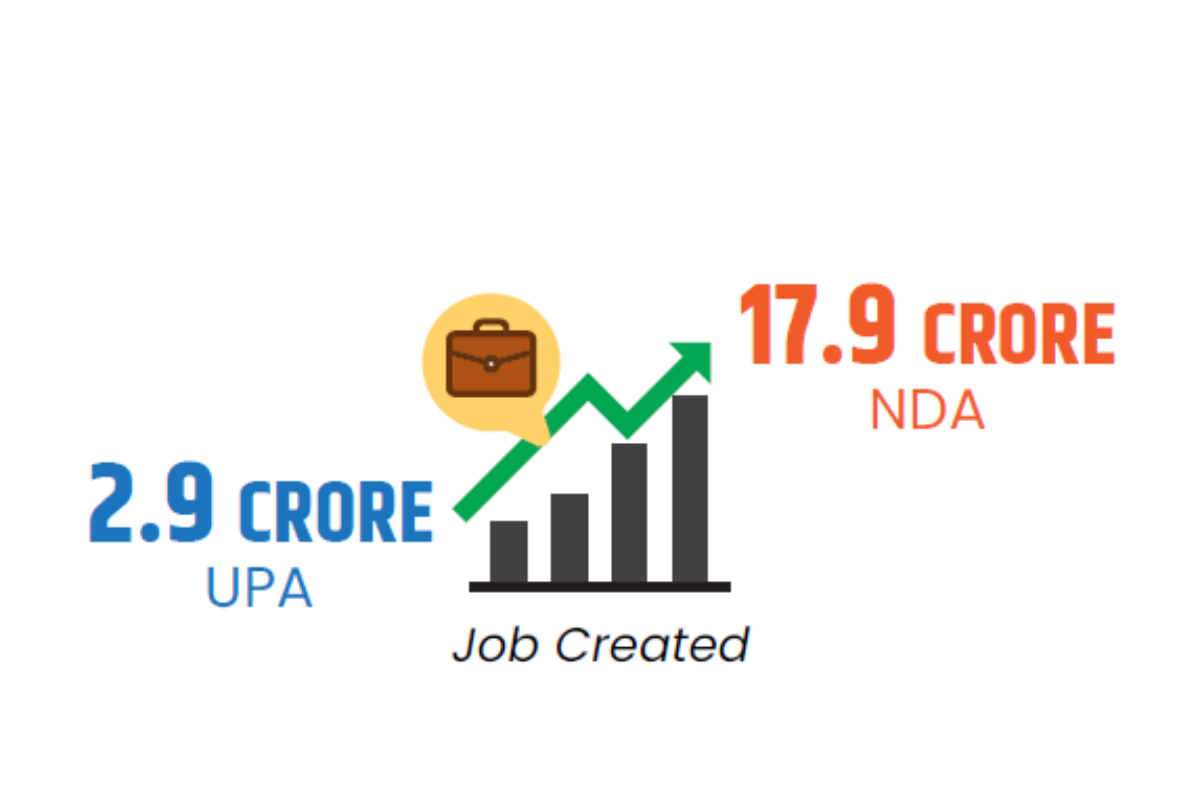
Critics argue that the Modi government has failed to generate employment. However, according to BJP, data and trends indicate a significant improvement in job creation compared to previous regimes. During the UPA era (2004-2014), employment growth remained stagnant, with only 2.9 crore jobs created over a decade. In contrast, the NDA government has witnessed the creation of 17.9 crore jobs, including a remarkable 4.6 crore jobs in 2023-24 alone.
According to NSSO data, unemployment under the UPA had risen to 4.7%, whereas under the Modi government, the rate has shown a consistent decline, reflecting a robust job market and improved economic conditions.
One of the most notable achievements under the NDA regime has been the surge in female labor force participation. The female labor force participation rate (LFPR) rose from 23.3% in 2017-18 to 37% in 2022-23. This growth has been facilitated by initiatives like Lakhpati Didis and Self-Help Groups (SHGs), which have empowered 89.8 lakh women to earn an annual household income of at least ₹1 lakh, particularly in rural areas.
The Indian startup ecosystem has witnessed unprecedented growth, providing significant employment opportunities. In 2013, India had only 452 recognized startups, but this number skyrocketed to 1.59 lakh by 2024, directly creating 17.2 lakh jobs. This rapid expansion has been fueled by government initiatives, ease of doing business, and increased investor confidence in the Indian economy.
The NDA government has also played a key role in formalizing employment. In November 2024 alone, 14.63 lakh new members were added to the Employees’ Provident Fund Organisation (EPFO), reflecting a shift toward secure and structured employment.
The government has placed a strong emphasis on youth employment through skill development programs. Under the Skill India initiative, over 14 crore youth have been trained. Furthering this agenda, the PM Internship Scheme 2025 aims to train and provide internships to 1 crore students over the next five years, collaborating with India’s top 500 companies to ensure hands-on industry experience.
Infrastructure investment has also played a crucial role in employment generation. Studies indicate that every ₹1 crore spent on infrastructure leads to the creation of 200-250 man-years of employment, spanning unskilled, semi-skilled, and skilled sectors. The government’s massive infrastructure push is, therefore, contributing significantly to job creation.