


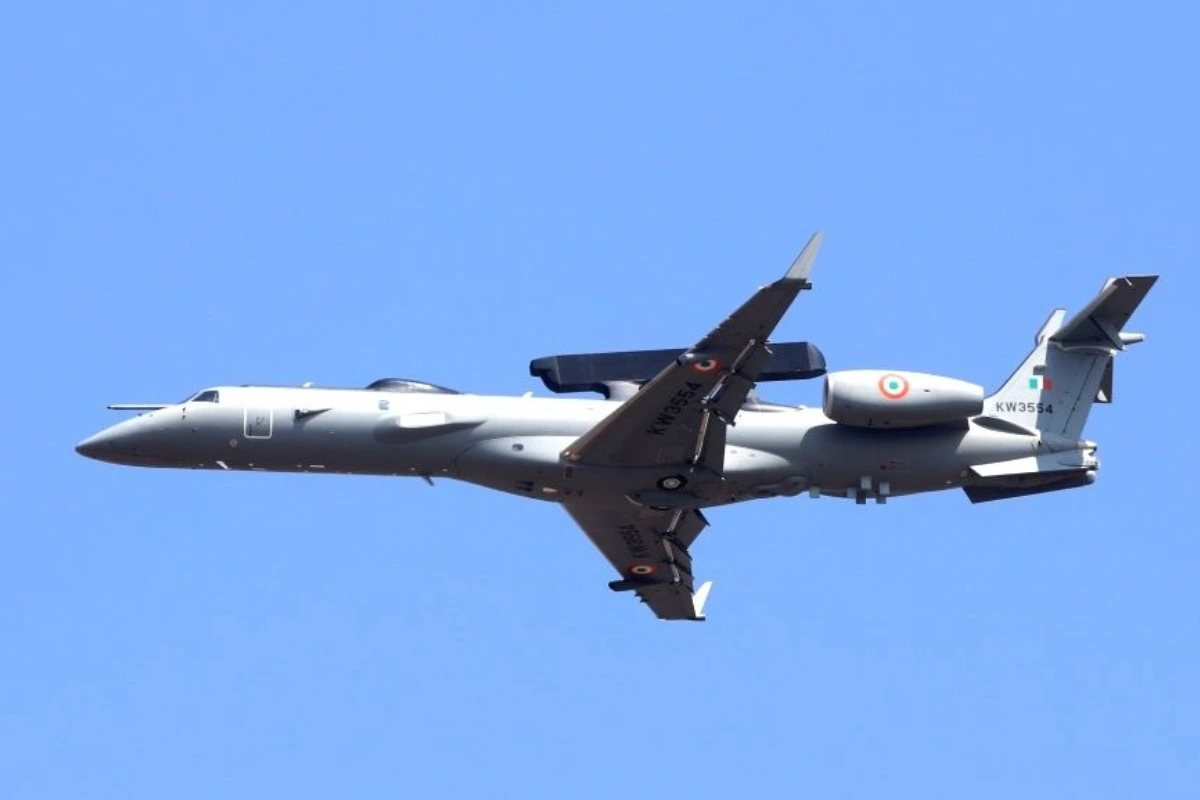






NEW DELHI: The Indian government has approved a ₹20,000 crore project to develop six indigenous Airborne Warning and Control Systems (AWACS) aircraft.

The Defence Research and Development Organisation (DRDO) will spearhead the project, marking a major milestone in India’s push for self-reliance in high-end military technology under the ‘Atmanirbhar Bharat’ initiative.
ALSO READ: Fuel cut-off in both engines behind AI 171 crash; no pilot error but 4 MEL items under lens: AAIB
The AWACS India project—also known as Netra Mk-II—aims to convert six Airbus A321 aircraft into state-of-the-art airborne surveillance platforms. These aircraft will be equipped with a top-mounted Active Electronically Scanned Array (AESA) radar dome, giving them 360-degree coverage and the ability to track enemy aircraft, drones, missiles, and other airborne or ground-based threats hundreds of kilometers away.
Unlike India’s current airborne early warning fleet, which includes the Russian IL-76-based Phalcon systems and Embraer-based Netra platforms, the new AWACS aircraft will offer extended endurance, range, and electronic warfare capabilities. The Airbus A321 airframes for this project will come from a batch already procured by the Indian Air Force (IAF), which were earlier acquired from Air India and stored for military conversion.
The new Netra Mk-II platforms will house a more powerful radar suite capable of long-range detection and simultaneous tracking of multiple airborne targets. These capabilities are vital for modern combat operations, especially in contested airspaces such as those near India’s borders with China and Pakistan.
The project’s approval reflects a strategic shift in India’s defence policy—reducing dependency on foreign suppliers and enhancing indigenous manufacturing and innovation. While Airbus will provide structural integration support, all mission systems, radar components, software, and electronic warfare suites will be developed domestically.
DRDO laboratories, particularly the Centre for Airborne Systems (CABS), will play a pivotal role in this effort. Private sector firms such as Bharat Electronics Limited (BEL) and potentially Adani Defence & Aerospace are expected to participate in integration and production.
View this post on Instagram
The radar system—one of the most complex elements of AWACS—will be a new-generation AESA radar mounted on a dorsal fin atop the aircraft. This configuration provides an all-round view of the airspace and will be fully indigenized, a major technological leap for India’s defence research establishment.
The target of completing the project in approximately four years, with the first modified A321 platform expected to be ready for testing by 2027. Once inducted, these aircraft will significantly improve the IAF’s situational awareness and airspace dominance, especially during conflicts or high-alert deployments.
India currently operates three IL-76 Phalcon AWACS, procured from Israel and Russia, and two smaller Netra AEW&C systems mounted on Brazilian Embraer ERJ-145 jets. However, these platforms have limitations in terms of range, number, and support infrastructure. Moreover, ageing Russian platforms and geopolitical complications have hindered further imports, making indigenization a strategic necessity.
Experts say that the indigenous AWACS programme will not only boost India’s combat readiness but also generate export potential and advanced technical know-how. With fewer than 10 countries in the world capable of developing AWACS platforms indigenously, India’s entry into this league underscores its growing status as a defence technology power.
View this post on Instagram
However, military analysts have also raised caution about execution timelines.
The ₹20,000 crore Netra Mk-II AWACS project is a transformative step for India’s airborne surveillance capabilities. It embodies the spirit of technological self-reliance while fulfilling the operational needs of a modern air force.

If implemented effectively, it will give India a decisive edge in aerial situational awareness, battle management, and force coordination in any future conflict scenario.